
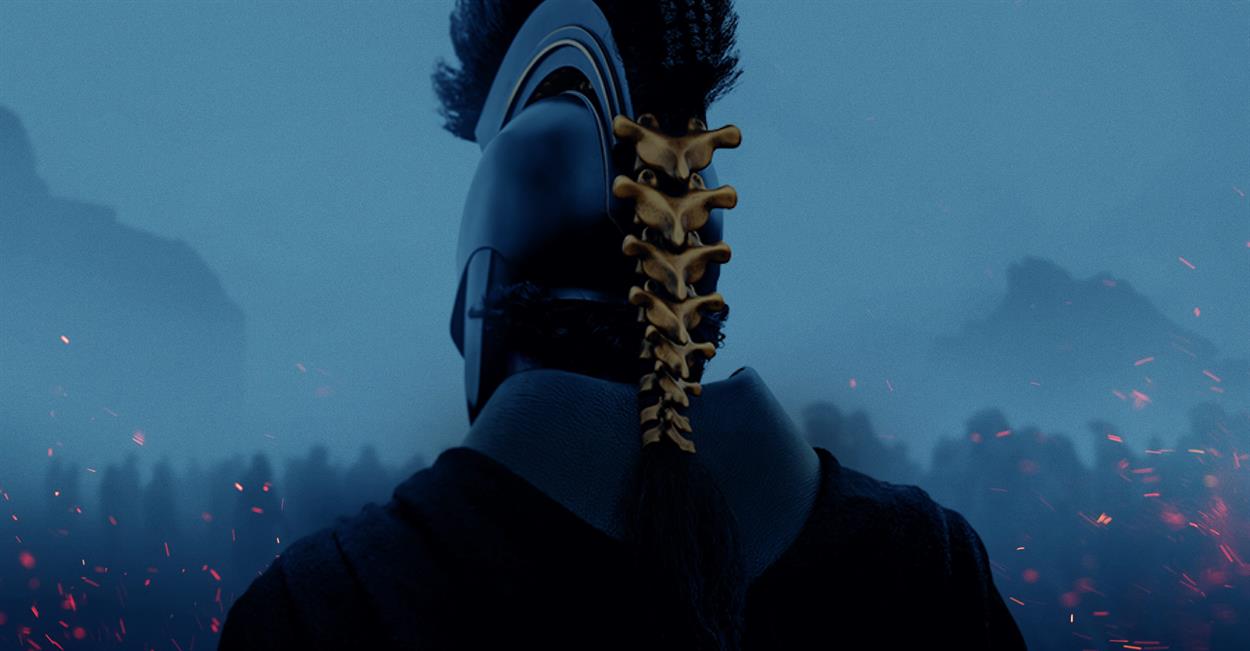
It’s been a while since a Greek-inspired film became a genuine word-of-mouth sensation, but Christopher Nolan’s The Odyssey feels destined to be part of the “film of the year” conversation for 2026.
Earlier in the year, horror fans watched Obsession and The Backrooms compete for attention. Obsession ultimately emerged as the more accessible hit, becoming an instant cult favorite and reportedly earning more than 500 times its budget. The Backrooms was a solid adaptation, but much of its appeal depended on the audience already knowing the lore.
Once that dust settled, attention shifted toward Nolan’s next major project. With a cast that includes Matt Damon, Tom Holland, Zendaya, Robert Pattinson, and Travis Scott, The Odyssey arrived with enormous expectations. Its biggest attraction for me, however, was not the star power. It was the opportunity to see a movie shot entirely on IMAX film presented in 70mm.
Audiences seeking the best possible experience were encouraged to see it in IMAX 70mm. The nearest theater offering that format is about five hours away from me, so I settled for a standard 70mm presentation. Even without the full IMAX setup, the experience was unforgettable.
This was my first time watching a movie projected from film, and I wasn’t sure what to expect. I had become accustomed to the clean, precise images produced by digital and laser projectors in both public theaters and home setups. Film felt different from the moment the presentation began.
After the previews ended, the theater fell silent for about five minutes while the projectionist prepared the movie. The delay turned into an unexpectedly funny social moment as people began chatting and wondering when the film would start. Then the opening scene appeared—bright, vivid, and full of texture.
A few imperfections from the print were visible, but they didn’t detract from the experience. If anything, they made the screening feel more tangible. The image wasn’t simply being displayed; it felt alive, with a physical quality that digital projection rarely captures. By the end of the movie, I wanted to see as many films projected on film as possible.
That presentation complements the scale of Nolan’s filmmaking. The large-format cinematography gives the landscapes, characters, and battle sequences a sense of weight that demands a theater screen. The action is thrilling, but the spectacle never feels completely separated from Odysseus’ journey. Each confrontation becomes another step in a story about survival, pride, fear, and the long struggle to return home.
The battle sequences were among the film’s strongest moments. They are intense, carefully staged, and consistently engaging. Rather than feeling like brief interruptions between story beats, they help carry the journey forward. I remained on the edge of my seat as the film moved through the legendary events first told in Homer’s epic poem.
Robert Pattinson was another highlight. His career has taken him from playing a vampire caught in a strange love triangle to an expendable worker in a space program, and he continues to prove how much range he has as an actor. In The Odyssey, he fully embraces the role of a cowardly bully. What makes the performance effective is how convincingly he shifts between intimidation and insecurity. He creates a character who is easy to dislike but still compelling to watch.
The entire cast brings real commitment to the material, but it is the combination of performance and large-format filmmaking that makes the movie feel so immersive. Nolan treats Homer’s story not as a distant piece of literature but as a dangerous, immediate adventure. Even viewers who have never read the original poem can appreciate the scale of the journey and the human weaknesses driving it.
If I have one reservation, it’s that the spectacle can occasionally overshadow the quieter parts of the story. With so much visual ambition and such a large cast, some moments do not have as much room to breathe as they might have in a smaller production. Still, the movie’s momentum and theatrical power more than compensated for that during my viewing.
The Odyssey is a reminder that the format in which we watch a movie can shape how we experience it. I would have enjoyed the film digitally, but seeing it projected in 70mm made it feel like an event. The vivid images, occasional imperfections, and physical movement of the film print gave the screening a character of its own.
This is not simply a movie worth watching. It is a movie worth going out of your way to experience in a theater—especially while film and premium-format screenings are still available.
TL;DR: Buy your tickets before it’s too late to experience The Odyssey in 70mm, IMAX 70mm, or IMAX with laser projection. This is exactly the kind of spectacle the biggest screen was made for.
Here’s a cool behind-the-scenes video of the filming process of The Odyssey using all IMAX cameras during the production.